
Intro to Warehouse Storage Racks
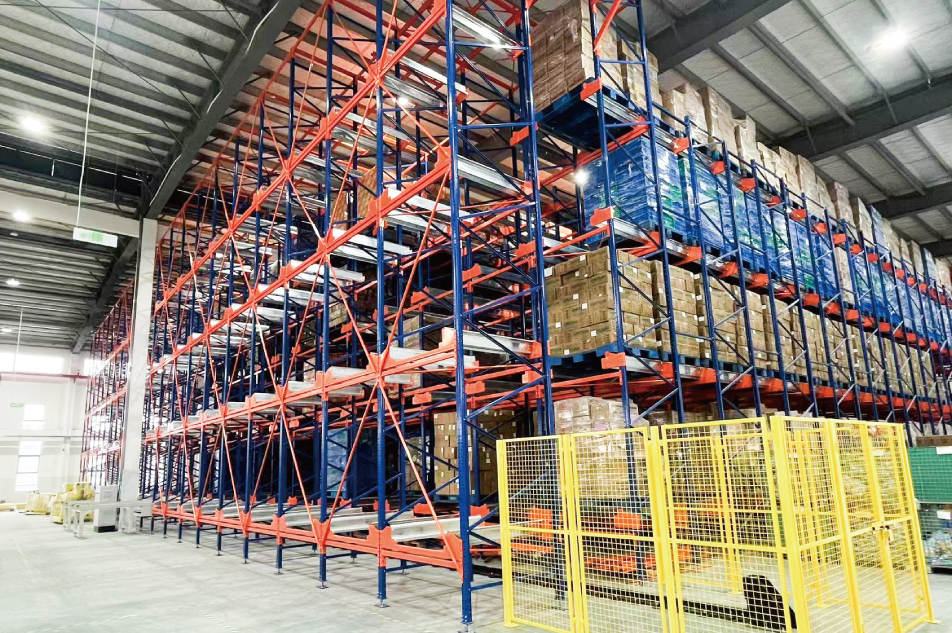
Why Warehouse Storage Racks Matter
Warehouse storage racks form the structural framework of any organized warehouse. They convert empty cubic air into functional vertical storage, improving layout logic, inventory visibility, and picking speed.
In warehouse storage, racks directly influence:
- SKU traceability
- Order cycle times
- Worker safety protocols
- Storage capacity and space utilization
Once a business outgrows manual bin shelving or random floor stacking, it must implement racking systems — not as an accessory, but as a logistical backbone. Without them, congestion worsens, error rates climb, and throughput collapses under volume stress.
The Definition of Warehouse Racking System
A racking system is a modular steel framework built to accommodate palletized or containerized inventory in horizontal rows and vertical tiers. Every component is structurally calculated:
- Upright Frames: Support vertical loads
- Beams: Hold the pallets between frames
- Decking (optional): Wire mesh or plywood to support smaller cartons
- Safety Add-ons: Protectors, clips, row spacers, anchoring plates
Unlike retail shelving, warehouse racks are designed to interface with forklifts, automated shuttles, and gravity-fed mechanisms. Their configuration determines warehouse flow efficiency.
Core Racking Types Simplified
Warehouses don’t follow a one-size-fits-all approach. The racking format should reflect product velocity, handling equipment, and inventory strategy.
| Rack Type | Ideal Use | Cost (Per Pallet) | Turnover Logic | Strengths |
|---|---|---|---|---|
| Selective Racking | General SKUs, frequent picking | $50–$80 | FIFO or LIFO | Accessible, flexible, low-cost |
| Double Deep Racking | Low-SKU, medium turnover | $75–$105 | LIFO | Increased density |
| Drive-In/Drive-Thru | High-volume, low-SKU inventory | $115–$140 | LIFO or FIFO | Maximum floor space usage |
| Pushback Racking | Medium SKU volume, compact storage | $150–$300 | LIFO | Reduced aisle needs, fast loading |
| Pallet Flow Racking | Perishables, fast rotation | $200–$400 | FIFO | Gravity-based, automated replenishment |
| Cantilever Racks | Long goods (pipes, timber) | $850–$2,500 | N/A | No front columns; ideal for bulky items |
Cost Considerations Beyond the Obvious
Racking is a tangible investment, but its total cost profile includes hidden elements:
- Installation labor – Requires specialized crew
- Safety components – Rack guards, aisle protectors, load signage
- Permitting – Structural permits based on rack height and seismic zone
- Material handling equipment – Forklifts, stackers, or narrow-aisle trucks
- Warehouse space – Leased or owned, with price influenced by racking footprint
Selecting the Right Rack: A Decision Map
Proper rack selection requires assessing operational characteristics.
| Decision Factor | Why It Matters | Implication |
|---|---|---|
| SKU Turnover Rate | Fast vs. slow inventory affects FIFO/LIFO suitability | Pushback and Flow preferred for FIFO |
| SKU Physical Size | Pallet dimensions define rack width, depth, and height | Cantilever best for irregular or long loads |
| Picking Method | Manual vs. forklift vs. AS/RS | Narrow aisle racking for automation |
| Space Availability | Total floor and vertical clearance | Drive-in racking for floor maximization |
| Labor Availability | Impacts load/unload complexity | Selective racks easier for untrained labor |
| Expansion Plans | Future SKU growth, automation, or multi-level integration | Modular systems with adjustable beams needed |
Rack Layout: Planning Beyond Just Placement
- Correct aisle width: Must match turning radius of material handling vehicles
- Cross-aisle planning: Reduces travel time for pickers
- Zoning high-frequency SKUs: Place bestsellers near dispatch or ground-level access
- Height vs. weight trade-offs: Taller racks = higher storage, but lower per-level weight capacity
- Integration with WMS: Each rack location should align with barcode or RFID zones
Understanding Rack Load Capacity
Failure to calculate load capacity can lead to catastrophic collapses. Consider:
- Beam span and depth
- Upright gauge and spacing
- Type of decking
- Total rack height and number of levels
- Uniform load distribution
Compliance and Maintenance Requirements
- Load ratings are displayed visibly
- Racks are anchored and plumb
- Damaged uprights or beams are removed immediately
- Warehouse aisles remain unobstructed
- Routine inspections occur monthly (minimum)
- High-traffic zones require weekly checks
Build or Outsource? Deciding Warehouse Strategy
| Factor | Build Your Own | Outsource to 3PL |
|---|---|---|
| Initial Capital Requirement | High | Low |
| Speed of Setup | 3–6 months for full deployment | 1–4 weeks to onboard |
| Infrastructure Flexibility | Fixed layout, expansion costs | Elastic storage across multiple sites |
| Expertise in Compliance | Must be developed internally | Comes pre-built with logistics experts |
| Control Over Operations | High | Moderate |
| Cost of Mistakes | Expensive (equipment and regulatory errors) | Absorbed by provider |
Common Mistakes in Rack Deployment
- Overloading beams beyond rated capacity
- Installing mismatched components across rack systems
- Neglecting to anchor racks securely to concrete slab
- Forgetting to include clearance for HVAC/fire sprinklers
- Skipping routine inspections and torque testing
FAQs
What’s the main difference between shelving and racking?
Shelving holds light, manually handled inventory. Racking stores palletized or large-volume goods and is accessed with machinery.
Do racking systems require permits?
Yes. Most regions require engineered drawings and permits if rack height exceeds 8 ft or if seismic loads apply.
How often should racks be inspected?
Monthly for general areas. Weekly in high-traffic, automated, or narrow aisle environments.
Can racking systems be reconfigured later?
Yes. Most systems are modular. However, consult engineers before adjusting height or beam placement.
What’s the typical lifespan of warehouse racks?
15–25 years with proper maintenance. Impact damage and corrosion are the most common lifespan reducers.
Conclusion
Warehouse storage racks are not passive steel frames — they are dynamic enablers of scalable logistics. Every beam, upright, and aisle defines your capacity to respond to demand surges, SKU expansion, and labor efficiency goals. Whether investing in infrastructure or leveraging a 3PL’s system, the focus remains the same: safe, accessible, and scalable storage.
Racking is the first structure to build — not after a problem emerges, but before it begins. Strategic warehousing starts here.
Do you need more information?
Our team of experts will be happy to help you with any questions you may have.
More information